By Jana Mihalikova, Founder & Managing Director of Heron Real Estate, Published November 2026
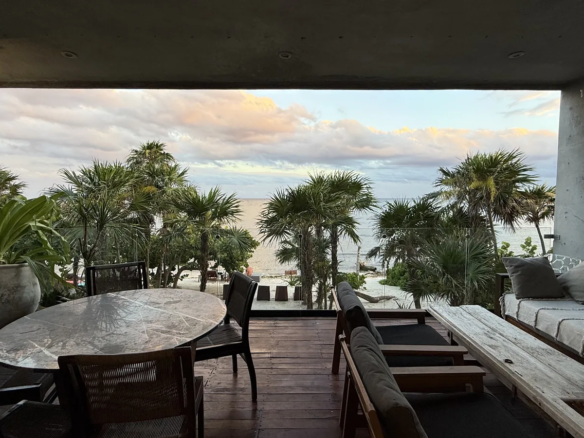
Where to live in the Riviera Maya depends on the life you want. Cancún offers connectivity and the widest choice of high-end property. Playa del Carmen is a walkable, social small city. Tulum offers a slow, nature-led routine. The three cities are about two hours apart by car, so the other two always stay within reach.
I like to think of this coast as one area where you can find everything you might be in the mood for, and travel to it. Would you like a polished night out? Puerto Cancún. A mindfulness retreat in the jungle? Tulum. A smaller town that still has everything you need? Playa del Carmen.
This guide compares the three cities and the towns between them. It walks through the neighborhoods I recommend, who they suit, what they cost and where expats connect. As a buyer’s agent in Cancún, Playa del Carmen and Tulum, I work on the buyer’s side of every purchase, so this advice is written for the person buying.
Cancún, Playa del Carmen or Tulum: How the Three Cities Compare
Cancún is the connected metropolis, Playa del Carmen the walkable small city, and Tulum the slow jungle town. Here is what daily life looks like in each. For the investment side, read our comparison of Tulum vs Playa del Carmen real estate in 2026.
All three cities are in one of Mexico’s fastest-growing states. Quintana Roo grew from about 1.86 million residents in 2020 to 2.1 million in 2025, according to INEGI’s 2025 Intercensal Survey. That is 2.2% a year, three times the national rate of 0.7%.
Almost half of the state’s residents (49.2%) were born in another Mexican state, and 2.4% in another country. The median age is 31. That mix explains the open, international communities you find along this coast.
Cancún: Connected and Cosmopolitan
By the numbers: Benito Juárez, Cancún’s municipality, passed one million residents in 2025. It counted 1,024,359, up 12.4% from 911,503 in 2020 (INEGI Encuesta Intercensal 2025).
Cancún is the largest of the three cities and the most popular with Mexican families. Its international airport connects you to the world within minutes. Business-minded residents choose it for that reach, and families for its universities, private hospitals and full services. Weekends here mean water activities and yachting.
Cancún also holds the widest high-end and luxury property portfolio on the coast, and it is changing fast. The government-backed Cancún Financial and Technological District is turning it into a modern business center.
The one thing to plan for is distance. The city is spread out, drive times are longer, and most residential areas need a car or public transport to reach the beach.
Cancún suits:
- Business-minded professionals and frequent travelers
- Families who want schools, universities and hospitals close to home
- Buyers looking for the widest choice of high-end property
Playa del Carmen: Walkable and Social
By the numbers: the municipality reached 394,326 residents in 2025, up 18.1% from 333,800 in 2020. The city itself counted 304,942 in the 2020 census.
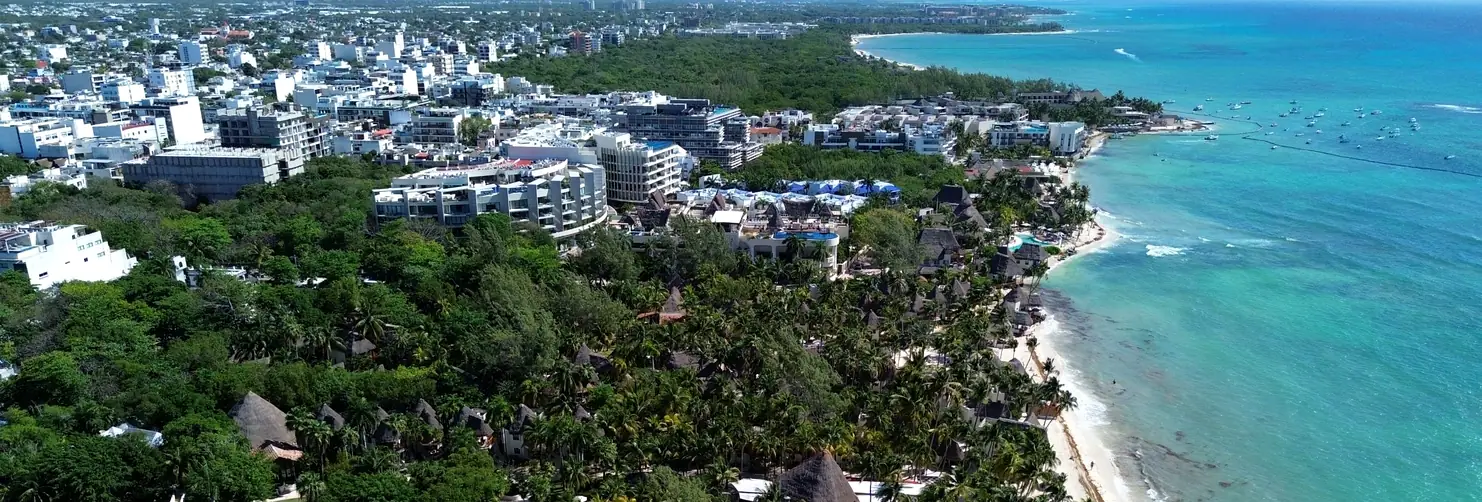
Playa del Carmen is more laid back, much smaller and walkable. You can walk from town to the beach, and much of the center is pedestrian. In recent years it has grown into a lively city, with regular free concerts and events. You will meet people from all over the world here, most of them leading active lives.
The city has international schools and universities, and its economy revolves mainly around tourism. Its position between Cancún and Tulum makes it a natural base for exploring. The airport is 45 minutes away, the highway leads to Valladolid and Mérida, and the ferry takes you to Cozumel.
Playa del Carmen suits:
- Families who want international schools and a walkable routine
- Retirees looking for an easy, social daily life
- Expats who want to meet people quickly
Tulum: Slow Living Close to Nature
By the numbers: the municipality reached 75,327 residents in 2025, up 61.2% from 46,721 in 2020. That is the fastest growth of any municipality in Quintana Roo. The town itself counted 33,374 in the 2020 census.
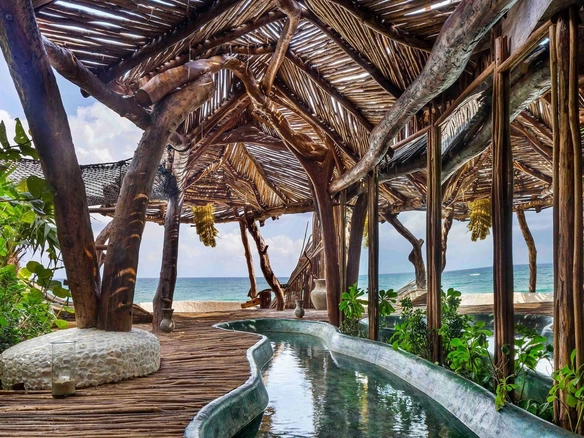
Tulum is the smallest of the three towns, with a jungle feel, a boho spirit and the slowest pace of life. Quality grocery stores, dining and a cultural program keep the standard of living high. It has become the coast’s mindfulness center, built around healthy living and nature.
It has the lowest density, smaller buildings and trees everywhere. Cenotes surround the town, the pyramids are close, and roads lead directly to the Sian Ka’an lagoons, Bacalar, Valladolid and Mérida.
Tulum lies between two natural parks. Since December 2023 it has had its own international airport, with a Tren Maya station beside the terminal. Most residents are American and Canadian, though you will meet people from everywhere.
Tulum suits:
- Wellness-focused residents who want nature in their daily routine
- Remote workers looking for a slower rhythm
- Buyers who prefer low-rise, low-density living
Which Area Fits You: A Quick Guide
The right area follows from how you want to live. Use this short guide to narrow the map before you read the neighborhood detail below:
- Families who want schools, hospitals and space: Lagos del Sol in Cancún or Playacar in Playa del Carmen
- Retirees who want an easy, social routine: Playacar, or Puerto Aventuras for gated marina living
- Young professionals who want to walk everywhere: downtown Playa del Carmen and Zazil-Ha, or Huayacán in Cancún
- Wellness-focused residents and remote workers: Tulum, in Aldea Zama, La Veleta or Holistika
- Waterfront and boating buyers: Puerto Cancún or Puerto Aventuras
- Second-home buyers and investors looking ahead: Costa Mujeres
- Divers, snorkelers and lovers of small coastal towns: Puerto Morelos or Akumal
- Buyers with a car who want space, a pool and privacy: Xpu-Ha
Cancún Neighborhoods: Where to Live and Who Each Area Suits
In Cancún, the neighborhood you choose decides how much time you spend in the car. These are the areas I recommend, and who each one suits.
Puerto Cancún: For Wealthy Families and Expats
Puerto Cancún is the city’s leading waterfront address. It is a master-planned community of about 800 acres (324 ha) between the Hotel Zone and downtown. It has a marina, private canals, a golf course, a shopping mall, hotels and condominiums.
Here you find branded residences, luxury condos and villas with their own marine dock. Our Puerto Cancún real estate guide covers the community in depth.
Puerto Cancún is Cancún’s most expensive neighborhood for condos. Across the city’s top tier, condos average about USD 947,000 (MXN 16.5 million) and villas about USD 1.61 million (MXN 28 million) in 2026. Asking prices often run 6–10% above likely closing prices, with a smaller gap for scarce marina and beachfront property.
One detail every beachfront buyer should ask about: Mexico’s environment ministry approved a USD 16 million project to restore 785 meters of eroded beach here. It also set aside USD 2 million a year for maintenance. Ask how those costs reach your HOA before you make an offer.
Hotel Zone: For Beach Lovers and Rental Investors
The Hotel Zone runs along the entire beachfront and holds the city’s highest concentration of hotels and resorts. That creates steady rental demand from tourists and locals. It is the natural choice if you want the beach outside your door and plan to rent the property while you are away.
Its strongest stretches rank among Cancún’s three fastest-rising areas for property prices in 2026, and scarce beachfront units are among the few that sell above asking. Expect tourist traffic, higher HOA fees, and a drive for groceries, schools and errands.
Lagos del Sol: For Families
Lagos del Sol is where I send families. It is a gated, master-planned community of over 200 hectares (about 500 acres) of residential, condo and commercial lots, built around lakes and green areas. The clubhouse includes sports courts, a gym and a semi-Olympic pool, and the community has 24-hour security.
Lagos del Sol is in the south of the city, near the international airport and close to universities. Puerto Morelos is about 20 minutes away and Playa del Carmen about 40.
You can buy a lot and build, or buy a finished home. Residential lots have been advertised from about USD 166,000 (MXN 2.9 million). Recent asking prices for four-bedroom homes range from about USD 750,000 to 1.28 million (MXN 13.1–22.3 million).
Huayacán: For Young Professionals
Huayacán suits young people who need to stay well connected to the rest of the city. The Avenida Huayacán corridor in southern Cancún has filled with gated communities, condos and shopping plazas.
Market analysts rank it among Cancún’s three fastest-rising areas for property prices in 2026, alongside Puerto Cancún and the Hotel Zone. Nearby gated communities such as Aqua and Cumbres have well-managed homes that are among the most likely to sell above asking.
Downtown and the Residential Districts: For Local Life on a Budget
Downtown Cancún, El Centro, is where most residents live and work. Rents drop the further you move from the beach, so this is the area for lower costs and authentic street life.
In outer districts such as Villas Otoch Paraíso or Gran Santa Fe, a realistic 2026 entry budget is about USD 80,000–138,000 (MXN 1.4–2.4 million). That buys an older two-bedroom apartment of 485–750 sq ft (45–70 m²).
Costa Mujeres: Cancún’s Next Top-Tier Address
Costa Mujeres is the coastline north of the city, facing Isla Mujeres and about 20 minutes from Cancún International Airport. In my view, it is the most likely future ultra-luxury area of Cancún.
Hotel brands are leading that shift. The St. Regis Costa Mujeres Resort opened in June 2026, and the pipeline includes the SHA Tower, JW Marriott Residences and W Residences, due in 2027. Branded residences along this corridor are priced above USD 860,000 (MXN 15 million) per unit.
Costa Mujeres is still evolving. Schools, shopping and everyday services remain in the city, so the area works best as a second home or an investment. Buyers who enter now gain an address that keeps appreciating as the area matures, with beachfront calm and the airport close by.
Isla Blanca: For a Quiet Beach Base
Further north, the Isla Blanca peninsula offers calm, low-key beach living. It is about 20 km from Cancún, in the Isla Mujeres municipality, and large resorts are starting to appear at its southern end. Expect fewer services and a longer drive into town.
What Comes Next: The Financial and Technological District
The biggest change in Cancún is happening inland. Mexico’s federal Official Gazette has declared the Cancún Financial and Technological District an Economic Development Pole. The first stage covers 100 hectares of state land near federal highways 180 and 307, 4.1 km from the Tren Maya station and within 5 km of the airport.
Its master plan includes corporate offices, specialized hospitals, technology centers and convention hotels, with about 11,000 direct jobs projected. The south of the city, home to Lagos del Sol and Huayacán, is closest to this new center of activity.
Playa del Carmen Neighborhoods: Where to Live and Who Each Area Suits
In Playa del Carmen, the choice comes down to one question: do you want energy at your door or quiet behind a gate? For a buyer’s view of every zone, see our guide to Playa del Carmen zones.
Playacar: For Families and Retirees
Playacar is the address I recommend most often to families and retirees. It divides into Phase I, along the beachfront, and Phase II, built around an 18-hole golf course. Phase II is a guarded community with 24/7 controlled access, green fairways and a calmer pace than central Playa.
Everyday life is easy here. The Hospiten Riviera Maya hospital is within the Phase II perimeter, the Xaman-Ha archaeological site is inside the development, and residents can reach Playacar beach.
Playacar Phase II ranks among Playa del Carmen’s three most expensive areas in 2026, alongside Zazil-Ha with the Coco Beach corridor and Xcalacoco. Inventory runs from condos to large golf-course villas; our Playacar homes for sale guide walks through what is available now.
Centro and Fifth Avenue: For Young, Active People
Downtown is for young, spirited people who love an active lifestyle and walkability. You step out of your building into cafés, beach clubs, free concerts and events, which make Playa one of the most social towns on the coast. Centro and Fifth Avenue also have the strongest short-term rental demand in the city.
The cost of that energy is noise. Living in the heart of Playa means street sound, limited parking and premium prices, even for compact or older units.
Gonzalo Guerrero: Downtown, a Little Calmer
Gonzalo Guerrero is between Centro and the beach and gives you the downtown lifestyle with calmer streets at night. It works well for buyers who want to walk everywhere and still sleep well. Inspect each building carefully, because construction quality varies from one project to the next.
Zazil-Ha and Coco Beach: For Newer Condos Near the Sand
North of Centro, Zazil-Ha and Coco Beach feel more residential while staying close to the beach and Fifth Avenue. This is where newer condo buildings and rooftop pools concentrate.
It is also the most expensive part of town, at roughly USD 280–400 per sq ft in early 2026. Some top-end beachfront units in Coco Beach reach about USD 640 per sq ft.
HOA rules can differ widely from one building to the next. If you plan to rent your unit, read the building’s rules before you make an offer.
Corasol: Gated Golf and Beach Living
Corasol is the newer high end of Playa, north of town. It is a private residential community with a golf course and private beach access, and one market report names it the most expensive condo neighborhood in the Riviera Maya. It suits buyers who want Playacar’s security and space in newer construction and are happy to drive into town.
Colosio, CTM and Ejidal: Where the City Is Growing
Away from the beach, Colosio, the CTM corridor and selected Ejidal blocks near the main avenues are Playa’s clearest gentrifying areas in 2026. They offer the lowest entry prices and the most local daily life. Quality changes from block to block, so look closely at the street and building before you commit.
Villas del Sol: Where I Advise Caution
Villas del Sol is the area I steer international buyers away from. It does not offer the setting or the peace of mind most international buyers look for, and other parts of Playa del Carmen serve them better.
Tulum Neighborhoods: Where to Live and Who Each Area Suits
Tulum is a buyer’s market right now, and that shapes every neighborhood recommendation below.
Why Tulum Favors Buyers in 2026
One local report puts condo prices 10–20% below their 2021–2023 peak, after supply outpaced demand. Tourism has also cooled: state data put Tulum hotel occupancy at 66.18% in the first half of 2026, down from 74.32% a year earlier.
What I see on the ground matches the data. Properties stay on the market longer, and sellers are flexible on price, payment terms and timing. Buyers regularly negotiate discounts of around 30%, and some properties are offered at half their earlier asking price.
Two-bedroom condos can be found around USD 150,000, and turnkey three-bedroom villas around USD 360,000. This window will close as confidence returns, and buyers who hesitate tend to pay for it. We cover the numbers in Tulum real estate in 2026: a buyer’s market and how to use it.
Aldea Zama: The Established Choice
Aldea Zama is Tulum’s most established residential area, with proven resale. Its infrastructure and community are already in place, so you buy into a finished neighborhood.
It holds the highest price per square foot of Tulum’s main residential areas, at around USD 246 per sq ft in early 2026. It suits first-time buyers in Tulum, full-time residents who want paved streets and services nearby, and anyone who values resale above upside.
Tulum Centro: Local Life on Foot
Centro is the town itself: markets, taquerías, banks, schools and the rhythm of local life. It is Tulum’s second-highest-priced area per square foot, at around USD 232 per sq ft, though smaller or older units often sell below the city average. It suits residents who want to walk everywhere and live among locals.
La Veleta: Choice and Value
La Veleta is larger and more varied than Aldea Zama. Boutique buildings stand beside villas with private pools, and infrastructure differs from street to street. It offers more choice and lower entry prices, but supply is deep, so compare buildings carefully.
Check the specific street before you buy, as some La Veleta streets carry a known flood risk. It suits remote workers and long-stay residents who want a neighborhood feel at a lower entry price. Our La Veleta real estate guide goes street by street.
Region 15: Proceed With Care
Region 15 has grown fast and has a strong jungle character. It costs less than Aldea Zama for a reason: infrastructure and daily services are still developing.
One property portal recorded a 19% drop in the median house price in Region 15 Kukulcán between April 2025 and October 2026, while Tulum overall rose 7.1%. The area also shows some of the clearest signs of short-term rental oversaturation.
I advise caution with generic presale condos here; a finished, well-built home on a good street is a different proposition. More in our Region 15 real estate guide.
Holistika and Region 8: Wellness Living
The area around Holistika is Tulum’s wellness district, close to yoga studios, restaurants and art spaces. Villas here price below Aldea Zama and above La Veleta, so it is the main option for buyers who want the wellness lifestyle without top-tier prices. Read how wellness real estate is changing what buyers want in Tulum.
Region 8 offers easy access to town and the beach road via Avenida Kukulkán, with a private, residential feel. Each project there was built independently, so design and surrounding construction vary from one development to the next. It is also the least developed area in Tulum with close to zero social services.
Tankah Bay and Soliman Bay: Beachfront North of Town
For beachfront living, look north. Soliman Bay and the neighboring Tankah Bay are protected by the reef, so the water stays calm and clear most of the year, and development has stayed low and residential.
You pay for that scarcity: Tankah Bay villas cost roughly twice as much as La Veleta villas in 2026. Before buying on the coast, review coastal maintenance, shoreline conditions, storm exposure and the property’s own infrastructure.
The Beach and Parque del Jaguar
Part of Tulum’s original beach strip is now inside Parque del Jaguar, a 1,000-hectare (about 2,470-acre) conservation park on the site of the old airstrip. It opened in September 2024 and the beach access is free with a beach club reservation. When you compare areas, think about how you will reach the beach day to day.
Between the Cities: Puerto Morelos, Puerto Aventuras, Akumal and Xpu-Ha
Some of the coast’s most livable addresses are the smaller towns along Highway 307. Each gives you space, water and quiet in exchange for a drive to big-city services, and each is within easy reach of Cancún, Playa del Carmen or Tulum.
Puerto Morelos: A Fishing Village on the Reef
By the numbers: the municipality reached 31,131 residents in 2025, up 15.6% from 26,921 in 2020.
Puerto Morelos lies between Cancún and Playa del Carmen, about 35 km south of Cancún’s Hotel Zone and 30 km north of Playa’s Fifth Avenue. That makes it one of the closest towns to the international airport.
The Puerto Morelos Reef National Park is a short boat ride offshore and is part of the Mesoamerican Reef, the second-largest barrier reef system in the world. On land, the town is framed by a second protected area, the Puerto Morelos mangroves, and the Ruta de los Cenotes runs inland.
Daily life centers on the pier, the leaning lighthouse and the small town square, with fishing boats on the sand and dive boats heading to the reef. It suits divers, snorkelers and buyers who want a small-town routine close to the airport.
Because some coastal parcels adjoin protected zones, confirm a property’s boundaries and permits before you buy. See Puerto Morelos real estate.
Puerto Aventuras: Gated Marina Living
By the numbers: the 2020 census counted 22,878 residents in the Puerto Aventuras area, which extends beyond the gated marina community to the neighborhoods around it.
Puerto Aventuras is a master-planned, gated community about 20 minutes south of Playa del Carmen and 30 minutes north of Tulum. It is built around a protected marina basin and a golf course, with controlled access and security coordinated with the homeowners’ association.
Residents move around by golf cart, meet in the cafés around the marina, and share the community with visitors. The community mixes Mexican and international residents and has a close-knit feel. It suits retirees, boat owners and families who want security and a walkable, self-contained routine.
Akumal: Sea Turtles and Quiet Bays
By the numbers: 2,154 residents in the 2020 census, making Akumal the second-largest town in the Tulum municipality.
Akumal is a small beach community between Puerto Aventuras and Tulum, known for its calm bays. Akumal Bay is protected as a sea turtle feeding and nesting area, and you can snorkel with turtles in designated zones.
Half Moon Bay is quieter, with a reef close to shore, and North Akumal is home to the Yal-Ku lagoon, where fresh water meets the sea. To the south, Jade Bay is known for its larger villas.
Akumal is off the main tourist path and far less crowded than the big towns. It suits nature lovers, second-home owners and anyone who wants the water as their daily routine.
Xpu-Ha: Space, Privacy and a Calm Beach
By the numbers: Xpu-Ha is a bay and beach area with very few year-round residents in the census, which explains its quiet.
Xpu-Ha lies between Puerto Aventuras and Akumal, within the Playa del Carmen municipality and 15–20 minutes south of Playacar. New gated communities here offer modern villas on large lots, private pools and residents-only beach access.
It suits buyers with a car who want space, privacy and a quiet beach, with Playa del Carmen close enough for dinner and errands.
Case Study: Choosing Between Playa del Carmen and Tulum
The right home sometimes lies between the cities. My most recent client was deciding between Tulum and Playa del Carmen. Their plan was to spend a couple of months a year working remotely from the property and rent it out for the rest of the year.
Their list was specific:
- A comfortable setup for remote work
- A bathtub
- A large, new, modern villa
- A large lot for their dogs
- A private pool
- A community that allows vacation rentals
They would have a car, so distance from a town center did not worry them. They loved Tulum, and for a while it looked like their answer. In the end, they fell completely in love with a new gated community in Xpu-Ha, 15–20 minutes south of Playacar.
The villa met every point on their list, and the community’s residents-only beach club, reached through a private tunnel, was the cherry on top.
Before they made an offer, we confirmed that the community allows vacation rentals, so their income plan rests on the community’s written rules. Our Xpu-Ha beach guide explains what living on this stretch of coast looks like.
Their search shows why I tell every buyer to start with the lifestyle they want and keep an open mind about the map. Remote work, a pool, room for the dogs and a rental plan led them beyond the two town centers they started with.
Expat Communities in the Riviera Maya: Where People Connect
Expat communities in Cancún, Playa del Carmen and Tulum are open and easy to join, and most friendships start online or around a shared activity. Wherever you settle, these are the places newcomers meet people:
- Facebook groups and WhatsApp communities, organized by city, neighborhood and interest, where people swap recommendations and plan meetups
- Expat meetups held regularly in all three cities
- Trivia nights, Latin dance classes and karaoke, which make it easy to join a group without knowing anyone
- Sports and fitness clubs, the fastest-growing way to build a social circle in the last few years
- The beach club or the community pool, where conversations start naturally with neighbors
Each city adds its own flavor. In Cancún, gated communities such as Lagos del Sol build social life around the clubhouse. In Playa del Carmen, the free concerts and pedestrian streets keep people out and mixing. In Tulum, yoga studios and wellness centers double as community hubs.
The Most Common Mistake When Choosing Where to Live
The most common mistake I see is buying before exploring comparable areas. Newcomers fall for the first neighborhood they visit, without weighing it against two or three alternatives that could suit them better.
The second mistake is not deciding early between a newer property and a central location. Many properties in the town centers are older, and older buildings bring maintenance to plan for.
A newer home often means a short drive; a central one often means an older building. Both can be the right answer, as long as you choose knowingly.
Before you commit, check these points:
- Compare at least two or three similar areas before you shortlist a property
- Decide whether a newer build or a central location matters more to you
- Ask about the building’s age and its maintenance history
- Visit at different times of day, and ask about noise in high season and during holidays
- Check the property’s orientation to the sun, which shapes heat, light and comfort all year
Always start with the lifestyle you want. The right neighborhood follows from there. For more pitfalls, read what buyers get wrong about buying property in the Riviera Maya.
Frequently Asked Questions
Is it better to live in Cancún, Playa del Carmen or Tulum?
It depends on your lifestyle. Cancún suits people who want an international airport, universities, private hospitals and the widest choice of high-end property. Playa del Carmen suits families, retirees and expats who want a walkable small city with the beach in town. Tulum suits a slow, nature-led routine in low-rise surroundings. Between them, Puerto Morelos, Puerto Aventuras, Akumal and Xpu-Ha offer quieter coastal living.
Where do most expats live in the Riviera Maya?
Expats live in all three cities. Playa del Carmen draws residents from all over the world, especially to Playacar, Centro and Zazil-Ha. Tulum’s foreign community is mostly American and Canadian, centered in Aldea Zama, La Veleta and Region 15. In Cancún, international residents favor Puerto Cancún and southern gated communities such as Lagos del Sol.
Is 2026 a good time to buy property in Tulum?
Tulum is a buyer’s market in 2026. Hotel occupancy fell to 66.18% in the first half of 2026 from 74.32% a year earlier, according to Quintana Roo’s tourism observatory. Sellers are flexible on price and payment terms, and buyers regularly negotiate discounts of around 30%. Finished homes in established areas such as Aldea Zama carry the lowest risk.
Find Your Neighborhood With a Buyer’s Agent
Heron Real Estate is a buyer-side advisory working across Cancún, Playa del Carmen, Tulum and the coast between them. Our licensed advisors help you compare areas, shortlist properties that fit your lifestyle, and connect you with independent lawyers and notaries for your purchase.
Learn how our buyer’s agent service works, book a complimentary consultation, and tell us how you want to live. Contact us for more details.
About the author
Jana Mihalikova is the Founder and Managing Director of Heron Real Estate, a buyer-side real estate advisory operating across the Riviera Maya, from Cancún and Puerto Morelos to Playa del Carmen, Akumal and Tulum. She advises international buyers in English, Spanish, Slovak and Czech.
Jana is a member of AMPI Playa del Carmen, the local chapter of the Mexican Association of Real Estate Professionals (Asociación Mexicana de Profesionales Inmobiliarios). Real estate license: 139101HE0DAAFS012002676. View Jana’s profile.
Last updated: November 2026
ARE YOU FAMILIAR WITH THE BUYING PROCESS IN MEXICO?
Get our comprehensive Buyer’s Guide covering legalities, taxes, and the step-by-step buying process.