By Jana Mihalikova — Founder & Managing Director, Heron Real Estate
Government-branded economic districts are announced regularly across Mexico. Many stay conceptual for years. The Cancún Financial and Technology District has moved past the announcement stage: the land is secured, a master trust structure is in place, and a formal investor incentive package is published – the project is no longer theoretical.
Here’s what’s confirmed, what’s projected, and how a Riviera Maya property owner or investor should read it.
What’s Already in Place
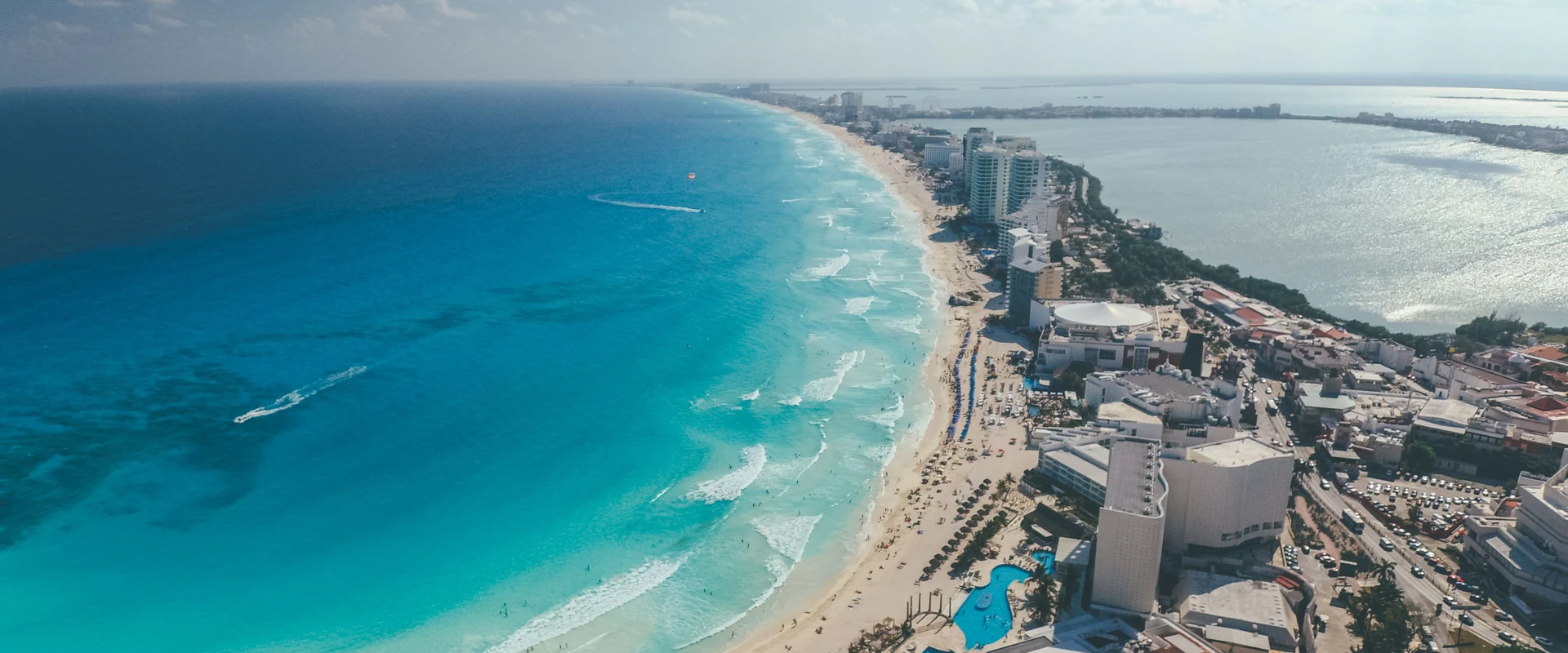
The district sits on 247 acres (approximately 100 hectares) of state-owned land 10 minutes from Cancún International Airport, positioned along the Maya Train corridor. The land is described by the project’s own investment materials as secured with no assembly risk, meaning it does not depend on acquiring parcels from multiple private owners before construction can begin – a common source of delay in large Mexican development projects.
Governance runs through a Private Master Trust, an institutional structure intended to give investors a defined legal framework across the project’s lifecycle rather than case-by-case negotiation with different levels of government.
The Incentive Package Being Offered to Investors
This is the part most relevant to anyone tracking whether large employers will move in. The district’s promotional materials outline:
- Incentives coordinated across federal, state, and municipal government
- 100% immediate depreciation on eligible capital investment
- A 25% additional tax deduction for R&D, innovation, and workforce training
- Payroll and property tax relief of up to 100% for qualifying companies
- Dedicated capital support programs specifically for anchor companies establishing regional operations
Target industries listed include financial services, fintech, artificial intelligence, software, corporate headquarters, healthcare, advanced business services, R&D, and higher education – a materially different tenant profile than the hospitality and residential development the Riviera Maya has been built around.
Three figures are worth separating from the confirmed elements above, because they come from the project’s own investor materials:
- $1.3–1.5 billion in estimated total investment
- 9,000–11,000 direct jobs, plus 22,000+ indirect jobs
- Framing of the district as unlocking a “$150 billion+ regional market”
These are the developer’s projections. As of August 2026, the district’s one confirmed tenant is the Premier Medical Destination Center, a $270 million medical nearshoring project announced separately by the state government. Additional anchor tenants, construction milestones, and a public groundbreaking date have not yet been revealed.
Why This Matters Beyond Cancún
A financial and technology district changes the demand profile for the entire Riviera Maya, not just the district site itself. Three effects to watch:
Corporate relocation housing demand. Employers in finance, tech, and advanced business services bring salaried staff who need housing near a Cancún workplace, not necessarily beachfront property. This is a different kind of buyer than the retiree or remote-work tourist the region has historically served.
A new benchmark for institutional-grade development. A master trust structure and a published incentive package raise the bar for how seriously large capital evaluates opportunities across Quintana Roo generally, including hospitality and residential projects outside the district itself.
Infrastructure spillover. Airport-adjacent development on this scale typically drives transportation and utility investment that benefits surrounding zones – Puerto Morelos in particular, given its position between Cancún and the rest of the Riviera Maya corridor.
How to Read This as an Investor
The district is at the stage where early positioning carries the most leverage: land secured, incentive structure published, and the first anchor tenant signed. That’s the window early institutional capital typically looks for.
The investment total, job figures, and market-size claims are the growth trajectory the district is building toward, but they’re also the same signals that, in comparable nearshoring corridors, have preceded real tenant momentum once the first anchor lands. The next 18 to 24 months, as additional tenants are announced and construction begins, will show how much of that trajectory converts. Investors and property buyers positioning ahead of that confirmation are the ones who benefit most if it does.
Talk to a Buyer’s Advisor
Heron Real Estate works with buyers across Playa del Carmen, Tulum, Cancún, Puerto Morelos, Puerto Aventuras, Akumal, and Xpu-Ha. Contact us for personalized advisory.
Frequently Asked Questions
Is the Cancún Financial and Technology District under construction? The land — 247 acres, roughly 100 hectares — is secured and state-owned. A public construction start date for the district as a whole has not been confirmed as of August 2026.
What tax incentives are being offered to companies in the district? Published incentives include up to 100% immediate depreciation on capital investment, a 25% additional deduction for R&D and workforce training, and up to 100% payroll and property tax relief for qualifying companies, coordinated across federal, state, and municipal government.
Who is developing the district? The project is promoted by the Government of Quintana Roo and governed through a Private Master Trust, an institutional structure managing the development lifecycle.
Is the $1.3–1.5 billion investment figure confirmed? No – that figure is the project’s own estimated total investment target, published in its investor materials. It is a projection, not an amount already committed or verified independently.
References:
- Cancún Financial & Technology District — official investor site — land, incentive, governance, and projection figures.
- Government of Quintana Roo — official communication on the Premier Medical Destination Center memorandum of understanding (August 2026).
- The Rio Times — “US$270M Medical Nearshoring Hub Planned in Mexican Resort Cancún” (August 2026).
Last updated: August 2026