By Jana Mihalikova — Founder & Managing Director, Heron Real Estate
On July 17, 2026, President Claudia Sheinbaum held her morning press conference — the “Mañanera del Pueblo” — from Tulum, and Secretary of Tourism Josefina Rodríguez Zamora used it to announce Plan Tulum Renace: a 10-point strategy aimed directly at a tourism slowdown that hotel owners, service providers, and ejido representatives in the region have been pushing the federal government to address. Full details of the announcement are covered here.
This is a distinct announcement from the “Tulum Renace” strategy the federal and state governments presented in November 2025, which ran to 128 actions across four broader pillars (attraction regulation, urban and environmental management, tourism promotion, and infrastructure). Today’s version is narrower and more immediate: 10 specific actions, several of which are already in force or have a stated timeline.
What triggered it
Sheinbaum’s trip followed weeks of public complaints about pricing and physical barriers at Parque del Jaguar, plus broader concern from hoteliers and merchants over a visible drop in visitors. According to the president, beach access at the park had technically been free, but transport costs and a perimeter wall blocked direct entry — a specific, named failure the new plan targets.
The 10 points of Plan Tulum Renace
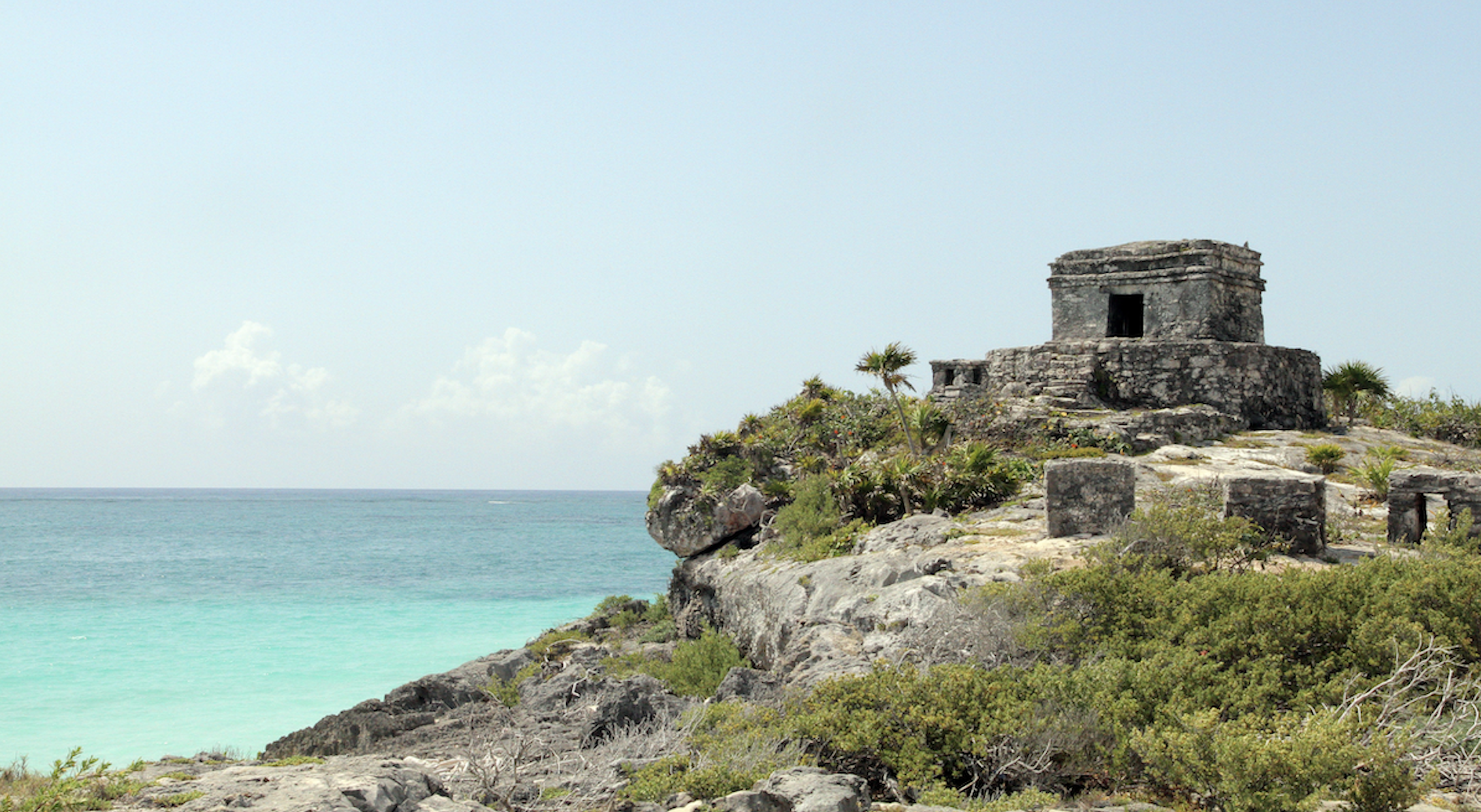
- Free national access to Parque del Jaguar — Tulum’s free beach, restored. Mexican visitors enter at no cost. Foreign visitors who only want to walk the park and view the archaeological zone from a distance can also do so free of charge; the only charge inside the park is $20 MXN for the electric shuttle, for anyone who chooses to ride it.
- Reduced federal access fees. Entry to the Tulum archaeological zone drops to $80 MXN for Mexican nationals and $265 MXN for foreign visitors — roughly half the prior cost — with free Sunday access for Mexican nationals maintained.
- Electric transport within protected areas. The park’s old “trenecito” shuttle is being replaced with a new low-cost electric transport system. This covers movement inside the protected area itself, for visitors who don’t want to walk between the entrance and the archaeological zone — separate from general park admission, which remains free.
- Integrated security. A dedicated tourist-care and security model is being deployed with the National Guard. The government paired this announcement with reported crime-reduction figures for Quintana Roo, presenting tourist-facing security as one part of the same package as the access and pricing changes.
- Training and certification for tourism service providers. This targets the guides, vendors, and operators who work directly with visitors in and around the park and archaeological zone, aimed at a more consistent, professionalized visitor experience — one of the specific quality concerns hoteliers had raised ahead of the president’s visit.
- New parking infrastructure at the park’s south access point. The government framed this explicitly as a benefit to local artisan vendors, whose foot traffic depends on where visitors park and enter.
- Urban services and public-order improvements in central Tulum. This extends the plan beyond the park itself into town infrastructure, responding to longer-running concerns about disorganized growth and stretched public services in Tulum.
- A new intercity public transport system. Intended to improve mobility between the town center, the hotel zone, and the archaeological zone/park area — addressing the physical fragmentation between Tulum’s main visitor areas.
- A permanent national and international promotion campaign covering all 12 destinations across Quintana Roo. This places Tulum’s relaunch inside a state-wide marketing push.
- New air connectivity — attracting new routes to Tulum International Airport and improving the direct link to the town center, the point most directly tied to future visitor volume.
Separately, the president confirmed plans to demolish the perimeter wall that had blocked direct access to the archaeological zone, and the government stated a night-lighting system for the archaeological zone is targeted for November, meant to support a new nighttime artisan corridor.
What this means for property buyers in the region
The clearest signal in this announcement is that the president came to Tulum in person to deliver it. That’s a level of federal attention the destination hasn’t had in this form before, and it puts Tulum’s recovery on record as a stated national priority.
Several parts of the plan are already in motion: the fee reduction and free park access take effect on publication in the Federal Register, the perimeter wall removal has been confirmed, and the security deployment is described alongside crime figures already being reported for the state. That combination of immediate cost relief, a named infrastructure fix, and a security narrative running in parallel — is a more coordinated rollout than isolated fee cuts alone would be.
For buyers, the practical read is this:
- The access and pricing complaints that were actively discouraging visits are being closed off quickly, which supports the visitor-experience side of the destination’s recovery.
- Security is being treated as core to the plan — a meaningful data point for anyone weighing long-term confidence in the area.
- Airport connectivity and the promotion campaign are the two pieces to watch going forward, since they’re the most directly tied to future visitor volume and, by extension, rental demand.
This is a tourism-recovery plan. A destination with sustained federal backing behind fixing its visible problems gives buyers a healthier starting point than one left to solve them alone. The next two quarters of arrival and occupancy data will show how much of this translates into results.
To talk through what a specific Tulum purchase looks like against this backdrop, contact Heron Real Estate, browse current Tulum listings, or see our other Riviera Maya market insights.
Sources: Presidential morning press conference (“Mañanera del Pueblo”), Tulum, July 17, 2026; statements by Secretary of Tourism Josefina Rodríguez Zamora and President Claudia Sheinbaum Pardo as reported by SECTUR México and Mexican press covering the conference.
Last updated: July 2026